Yesterday's post may not have made sense to anyone. It was a presentation for class today, and rather than fumbling around with flash drives in front of class, I just used the internet.
When I think of the future of computer interfaces, there's one realization I keep coming to. There will always be a need for silent unencumbered expression of thought. And the most versatile method, it to use our ten digits. Hence my play on words, "Digital data entry". The most ubiquitous of these mediums are handwriting, typing, and texting, chronologically. Getting rid of the keyboard seems to me a nearly impossible ordeal. Gesture interfaces will be important, no doubt, especially as we deal with arranging and understanding huge quantities of data at one time. Gesturing a business email though, won't catch on. Even with intelligent software that can help predict and show the most likely words you may use next, it just doesn't make sense to use your arms that much for text entry. Though, I suppose there will be some who adopt it for the sole purpose of burning a few calories while they waste away inside a cubicle. Kind of like the office chair ball.
I could see someone marketing gesture software for the office though, something that sells itself as a fitness product. Take a Wii balance board and put it on a chair. That's your mouse, and you shift your weight to point it around. Work those obliques! Then use a few wands, like a Wii or Playstation Move, and design some small pockets to add weight as you wish. Viola, you may look silly, but your arms and abs could look better. I'll make that prediction now, someone will use this idea. But this can only be a fad, or an option for young vain executives, and silly creative types (me?), you'll never see this set up in a library. We must design for the lowest common denominator, and the fact is, there are many people out there that don't have the ability, or don't want to waste their energy while they write an email or surf the web.
We have 10 fingers capable of individual movement, and we need an interface that reacts to our input. Gestures cannot do this physically, only aurally. Feedback is important, buttons are important. That's why touch screens (virtual buttons) click audibly or vibrate physically, to help us know something has been pressed. I do not doubt the variety of ways this technology can be used, but you won't see it in the accounting office.
What else could we input with? Voice? Yes, but we're not going to talk out the email we're sending mother at work in front of everyone, nor would we want a whistle blower to have to verbalize an anonymous tip off. Silence is definitely key here. Of course it is, that's why texting is so huge now. I think we all realize that texting is basically mobile telegraph stations. It appears kind of backwards. If we can just talk, why don't we? The telephone took much longer to develop, and it revolutionized the world. Well, the reality is, we can't always talk. I like to send someone my thoughts while I'm thinking them, but maybe they're at work. Maybe it can wait (ex: "You left your hat"). Maybe you don't need a response, like ("I'll be upstairs at Henry's"). There are a million reasons not to speak your message, and there's hardly a phone out there that hasn't tried to make texting easier. By QWERTY or by predictive text, T9, etc. There's a very real need for it, don't get turned off because 13 year old girls aren't talking anymore.
So what then? Mind control? Should you be able to control a public computer? What connection does that computer have with you? Can you control another persons computer? I can't even imagine how easy it would be to accidentally send something, or think the wrong words to your embarrassment. This is filled with troubles and riddles, and all sorts of security problems.
So what is the future? The future is the keyboard I'm afraid. Could we all switch to a new data entry system? The fingers are just too good of an input device to ignore, but we've trained the whole nation to type on QWERTY. Tiny movements, 10 individual options at any given time, and the whole world has more or less accepted this device. Maybe there is a better layout, maybe we could merge some stenography concepts into a simpler looking device, but that would leave out the people that need to 'hunt and peck'. I think we've got another 40 years of this device, if not longer. Look at the original digital data entry machine. The first keyboard. The piano.
The piano stuck.
GeorgeP
Thursday, January 27, 2011
Wednesday, January 26, 2011
Wayfinding
The specific wayfinding task we have chosen is for someone who is unfamiliar with the Art and Design building, who must start at the east stairs and find room 345. My wife was the first outside research subject.
To my surprise, she chose this entrance. I found it a little unwelcoming, but she was undeterred.
Though she wandered a bit in the stairwell, she found the 3rd floor due to the signage.
The only sign that suggests other rooms, but was not heeded the first time.
Instead we walked around the rest of the building, even up to Gregory Thomas' office.
She eventually finds the way, admitting that it's the last option.
It's the bright room at the end of the hall. I asked her to find her way back to the stairs, and thankfully, she tried the other route away from the room, and we wound up in the same stairwell we began in.
Below is the actual path we walked through the building.
Though we've only started with one tester, I believe this is a wayfinding PROBLEM that can be resolved. The above is a representation of the problem, that we hope to develop into the solution with more research and more detailed observations.
GeorgeP
on the origins of 'makethink'
My first design class, BDS 101, is actually titled, Think/Make. It is the first iteration of a new design curriculum, and though things can be a bit confusing, I feel they are up to date, and headed in the right direction. I read a lot of the design education articles over on Core77, and it seems the people behind the new curriculum are too. I think Bruce Mau is the one that talks about "T-Shaped" designers. The top of the T represents the wide area of knowledge, and at least one area of real depth into a specific field. The school is forcing me to confront graphic design, photography, painting, drawing, etc. Thinking, making. It's a good title, but not where I derived mine.
Two years ago, AIGA had a design conference called Make/Think. Most all of the design world was represented in some form or another, from design educators, to photographers, to industrial designers. This was the first time I saw the words make and think smashed together. At least publicly.
As you can see, this appears closely linked to the name of my blog. Well, it's actually my gmail address. Back in 2004, I got an invite to Gmail, and I really needed to retire my old pseudonym (you don't want to know). I remember a friend of mine, Paul Kriley, had a screen name, "sail drawn soul" and I was mesmerized at how much was contained within the simple three words. I was on a search for something broad, that I hoped could still help define me a bit. I ended up with makethink.
So there we have it. It's not from the class, or conference, perhaps inspired by the band-name Do Make Say Think, but no matter. It's my handle, and I won't give it up. Even though really, 'sail drawn soul', is hands down 10 fold the name. Maybe I need a third word.
BeerMakeThink
MakeSomeThink
WakeAndMake
ThinkMakeEat
ThinkSleepMakeBreakfast
BikeMakeSweat
EatPrayLove
ThinkRenderRepeat
MakeDrawPretty
Well, maybe not? Although, I keep chuckling at wake 'n' make.
GeorgeP
Tuesday, January 25, 2011
Back to Shcool
I'm happy to be back in school, and now that I'm back, blogging is now enforced twice per week, which is part of the reason I tried to get in the habit over break. More of my posts will be oriented toward school, but I still plan on posting about random design issues.
Our new project is concerned with way-finding, or 'environmental legibility', through which we will utilize some of the newer creativity concepts, like 'body-storming', and '2nd order' thinking. Second order thinking doesn't have a handy link, but it's basically removing yourself and your desires, ego, preferences, etc., from the situation at hand, and letting the solutions be oriented to real and imaginary users of a system, not you.
Perhaps I can re-define that. It's simply being objective in the design process. I imagine graphic designers run into this a lot. If you love designing concert posters, would you be able to design a poster for a concert held in a retirement home? Your users are most definitely not you, and if you don't know how to step back and solve from an objective standpoint, you're not going to get called back for more work. I think those situations are easier to see the reason for objectivity. I suppose the real problem is when you want to design something for which you could be the target market. The ability to remove your ego from, say, cell phone design, is probably not as common among a great deal of designers, as that situation makes it harder to notice your own bias, and user/designer confusion abounds.
So, back to the project; we'll simply find a place to go, and place to come from, and research all the possible decision making between those points. After mapping out the numerous decisions that are made, the existing environmental legibility, and maybe mapping any of the environmental elements, we will construct a representation of the current reality as a baseline to work from. Then, we'll take this 4 minute walk, and reduce the mental strain to the greatest degree possible. This means the golden mean between no information, and too much information.
On another note, I just want to further explain the audience of this blog, its not a blog about George, its a blog about design, and I just want everyone to know, you'll be bored to tears if you come for entertainment. Hopefully, in a few years, I'll have some sort of presence in the design world, and will be able to point back to this for any future employers. Let me set a goal actually, by the time I graduate, I hope to have at least one link from a major design site to one of my posts. That goal is pretty 'up-there', but Core77 posts like 12 times a day, so it's not insane to think I could get a link over the next 3 years or (quick math) 130,000 posts. Plus when my rendering skills are better, this will also work as a long-term portfolio. I'm also taking a non-fiction essay writing class, so this terrible writing will get better. I hope to find my voice by the end of 2011. We'll see.
GeorgeP
Wednesday, January 19, 2011
Bad Design: VW takes 3 steps back
I don't ever want to be a car designer. At least, not a car stylist. I've never been a really big critic of car design, though it can get me excited from time to time. Like when I was 13 or so, I remember seeing the Ford GT90 from '95 for the first time. It blew me away back then. It shows it's age a little now, and sort of reminds me of one of my brother's Record Breakers toy cars.
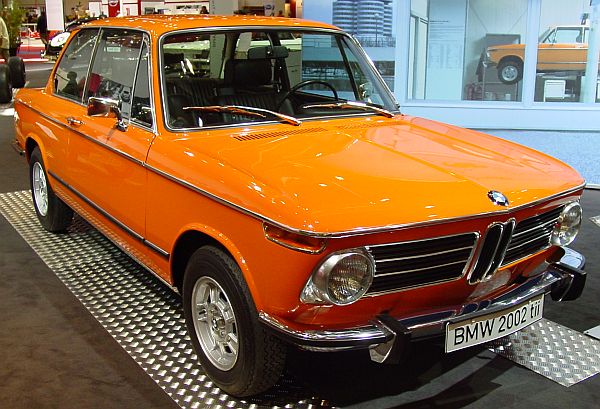
Anyway, I've always noticed the basic cars too. In fact, some of my favorite cars are simple, like the BMW 2002. So, I don't necessarily want everything to be an aero-wedge with a mid engine V-12.
I don't mind understated cars, but Volkswagen have really outdone themselves this year, ruining nearly all of their models by copying 5 year old Korean design, which was a copy of 5 year old German design. It's the 30th anniversary of this car, so I guess they went back to their 'roots', which is the most unassuming car ever.
I've always liked VWs, but after the CC came out, I realized they must have fired their designed team. Or hired some South Koreans. For example:
I reference Korean design with disdain here, trying to show how 'crappy' Volkswagen has become. In the past, KIA and Hyundai have been cranking out some of the most generic, uninspired looking cars on the road. The insides were better than every Chrystler from the 80's until now, but they have always been invisible, or in the case of the early Hyundai Tiburon, ghastly.
That's changing though, as this year's KIA lineup out-styles Volkswagens hands down, and I REALLY never thought I'd see that.
Here is the NEW Optima, and man dang, that's what a car should look like in 2011.
I should probably look up who's been doing the designing. I'll see what I can dig up. Until then, you'll just have to take my word for it, VW fired it's design team, and KIA hired some fresh talent.
You heard it here first.
GeorgeP
They didn't have a remote control and I don't remember a functional track, though the commercials get around that, I guess we were supposed to set them down and assume the toys would duke it out like a dachshund race.
I don't mind understated cars, but Volkswagen have really outdone themselves this year, ruining nearly all of their models by copying 5 year old Korean design, which was a copy of 5 year old German design. It's the 30th anniversary of this car, so I guess they went back to their 'roots', which is the most unassuming car ever.
![]() |
| 2006 Hyundai Sonata |
![]() |
| 2011 Jetta, or 2007 Corolla? |
![]() |
| Popular 5 year old economy car, 2007 Corolla |
I've always liked VWs, but after the CC came out, I realized they must have fired their designed team. Or hired some South Koreans. For example:
![]() |
| A KIA Optima |
![]() |
| The new VW CC |
![]() |
| Named after a shark, designed after a Pontiac Sunfire |
Here is the NEW Optima, and man dang, that's what a car should look like in 2011.
![]() |
| Korean Design Wins |
I should probably look up who's been doing the designing. I'll see what I can dig up. Until then, you'll just have to take my word for it, VW fired it's design team, and KIA hired some fresh talent.
You heard it here first.
GeorgeP
Thursday, January 13, 2011
Like a G6
Just before the holiday, my wife and I went out with some friends to do some dancing. I didn't manage to work up the feeling for it, but I did hear an apparently popular new song about Gulfstream aircraft. In the world of hip-hop, excess is the rule, and really, the only way to one up a twelve cylinder Lamborghini is personal air travel.
I wrote a post earlier about how flying cars don't belong in a society with limited resources, as it would be easily the most costly (read: inefficient) form of transportation to date. The other day I realized though, its only a matter of time before a flying car shows up in a rap video. In fact, "Like a G6" sort of sets a precedent for the model or brand (in this case both) to be included in the title of the song itself.
"Like an M400"
You heard it hear first.
GeorgeP
Tuesday, January 11, 2011
Moving water around.
I hope we're all up on the fact that drinking bottled water in America is pretty much a trend started by models. Though it's good to get America off soda, shipping water around in plastic when we have piped the entire nation with water delivery infrastructure is more than insane. First, take the water from the tap, soften it for Coke, or reverse osmosis for Pepsi, bottle it, put it on large trucks and drive it to people. Really your buying a plastic bottle, and gasoline (to get it there), both made from good old oil.
I think we're getting away from that trend a bit, but we're shipping water in other ways too. Soap. Laundry detergent is diluted because it's easier to sell a huge canister for 12 bucks than a small one. Some of that has changed too, and if you look, you'll find concentrated detergent (my favorite is Mrs. Meyers). Again, this saves on oil for the plastics, as well as reducing the shipping weight and size, effectively halving the oil it takes to get it to the store.
Another area is hand soap for public use. For sanitary purposes, reducing soap to a liquid means every one can dispense their own without touching the source. Well, a clever idea could change that.
This probably seems silly to a lot of people. But the reality is, simple re-thinking, or un-thinking the design of the ubiquitous can make the largest changes. Yes, hybrids are neat, and someone needs to buy them so we can keep putting money into the technology, but even those have a net positive carbon footprint that is much worse than driving a Corolla for equal time periods. I think we tend to adapt status symbols of green (hybrid cars), or maybe just lean toward more outward expressions of it (tote bags!). But it's the boring stuff that we need to re-evaluate. Everyone needs soap, dehydrate it, ship it in paper, make it happen.
Another boring one that actually got the attention of the government is light bulbs. I wrote about waste heat earlier, and it's this problem that is killing Edison's filament bulb. The amount of power the filament bulb actually is using for light, is only small portion of it's draw. The rest of the energy goes into waste heat.
I am not against this idea of course, because light is a universal need. How much wasted oil did we burn just to add heat to the houses we are trying to cool down. This is a much needed transition and I don't have a problem with government intervention in this case because the market would probably not have made the smarter choice on it's own, that is, the choice that reduces our dependence on oil. Those that think it's nanny-state oppression, consider the energy needs of this nation, and go find out where it all comes from. It is a national security issue, of that there can be no doubt.
The small things add up. Quit shipping water around.
GeorgeP
Good Design, coffee transport
Everyone has probably heard me blabbing about Contigo travel mugs lately. I gave three of them as gifts this Christmas, and most of the time I can tell my own excitement for this travel mug is not as contagious as I first expected.
For years I've been waiting for a decent travel mug to come around. There have been a few notable designs, but nothing quite as utilitarian as the Contigo. It's virtually unspillable, and because every second you're not drinking, it remains sealed shut, it will keep your coffee hot for a surprising amount of time.
I suppose it's a more appreciated product for someone who leaves home via bike or bus everyday never arriving at my own office, but bound to moving in and out of lecture halls with no cup holders. To avoid buying coffee everyday, it's truly been a game changer to the viability of brewing my own coffee at 7:00 and enjoying it until 11:00.
There's not much to change in this design. I might inflate the size a bit to get even better insulation properties, possibly simplify the lid shape a bit, but what I would really like to see is a more robust version.
Historically, travel mugs have been objects of slightly more re-usability than a Styrofoam cup, and I think there should be a market for a more permanent solution.
In my mind, the base is stainless with two Lexan windows. Between the exterior and interior is transparent Aerogel for insulation, cradling the inner glass chamber, say 12 ounces. This would provide amazing insulation, while still being able to view the contents. The lid would be much the same with better materials. Perhaps stainless bits for the plastic ones, and to top it all off, a ceramic drinking surface. This mug may cost 60 or 70 dollars, but I can see using for 20 years, finding a permanent spot inside a leather briefcase that will last just as long.
For all the cups we make and trash, travel mugs seem to have a lifespan only slightly more extended. If we make a product that people care about, and a product that is built right, serviceable, and effective, rather than the 4000 paper cups, or the 45 travel mugs we would use in a 20 year span, why not make a more permanent solution? I don't think travel mugs are something that people would have a problem using for a great deal of time. It could fall into a category of the more timeless products of our lives. Things like the briefcase or a well designed tool. It's need doesn't go away, design it well, make it last forever. Ever since Gillette introduced the throw away razor, we've been a slave to the most simple of capitalistic operations. Make them come back for more.
Don't get me wrong it doesn't look easy. At the same time, replacement razors cost what these days?
Anyway, many object's very function is of a temporary nature, but some of our needs are forever. Maybe a 20 year coffee mug isn't going to get us back to sustainable design, but there are way too many things we only need one of, that we don't even consider silly for having a dozen of. The 'affluenza' will go as transportation costs go up, those selling objects of lasting value will be better suited to survive. I'm not into apocalypse theories, but we will be forced into dealing with energy during my generation. Making less crap, (though ostensibly making stuff is my career choice) will be a huge part of that reality. Honing in on objects that need not be manufactured for one use before disposal will also be part of that reality.
Here's a step, get Starbucks to price everything on their menu to include the discount of having your own container, and "charge" people for paper cups (the price they would have paid anyway). The pricing scheme would not change in any way, but I bet you the behavior will. I bet we'll see that sort of thing around the corner. You heard it here first.
GeorgeP
Friday, January 7, 2011
Constraints 5 - 8
I'll gradually finish posting my school work from last semester. More specifically, I'll post school work when I can't figure out what else to post about.
Constraint 5
Circle Triangle and Square
This is the only one worth mentioning. The final rendering was done on Illustrator so everything is perfect.
Constraint 6
Photocopier + Cut/Paste
Of all constraints, this took the longest. I spent about 5 hours just to get to twenty images, the requirement for each of the constraints.
Constraint 7
Alternate Marking Tool
In the first image I used a bike chain, and the other three were a chopstick. The bottom image might be my favorite from the whole project.
Constraint 8
One line only
This was certainly a tricky one. The final avoids the hand drawn approach, you'll see that soon. I went with something somewhat like the upper right image.
Ok everyone, the week is over. First week of 52. I'm going to keep to my resolution, I'm determined. Seeya Monday.
GeorgeP
Thursday, January 6, 2011
Reduce, reuse, rethink. Waste heat and you.
The last few times I had a drink with my architect friend El Ensalada, we talked about using the heat from microprocessors to power some electrical drip charging function to extend battery life in laptops or reduce power draw on stationary equipment. It started as simple idea for a single device, but as I stewed on it, I realized the problem was ubiquitous.
The fundamental issue is this: A great deal of powered machines generate heat, electronic devices and otherwise. Heat is energy of course, but rather than harnessing that energy, we employ even more energy to disperse that heat away from the source. Basic thesis then, why not employ that heat energy and do something useful with it. Here are a few examples from my mind grapes:
Internal combustion engine.
The heat generated by an engine is pretty great, but with a simple water pump and radiator, we divert that heat away (to the air) letting the engine operate at appropriate temperatures. We created a system specifically to remove energy from the greater system. How is it powered? With the engine of course, which is designed for the exact opposite function, to create energy. Why? Well, because it's pretty simple, very reliable, and the water pump attached to the crankshaft probably doesn't create a massive amount of power loss. But it seems to me even a small increase in motor efficiency can create a huge savings when multiplied against the sheer number of vehicles in use every day. So, here is the question; how can we harness that heat and turn it into useful energy? Here's an option, although it has probably a million more parts that I would want in a machine that people expect to work perfectly every day with little or no maintenance. What about the existing cooling system? Water produces great pressure with heat, it seems some sort of enclosed steam cycle could power itself off an internal combustion engine. Does that exist? I need a research assistant.
The desktop microprocessor.
This was my original thought line. There's basically a hot-plate inside every desktop in the nation, and each one of them is kept cool by spending energy to dissipate energy. Why not use it for something? Like I said, my original idea was to turn heat into electricity. Some guys at MIT are working on that, and it doesn't seem all that simple. My mind floated to other useful forms of energy, and that's when it hit me. Turn heat into motion rather than electricity. With a simpler concept, I turned to research and found a few options for heat engines. The one I liked the most was called the Stirling Engine because it did not use intake or exhaust in it's cycle. Armed with some newly discovered words, "Stirling Engine" and more importantly "waste-heat engine", combined with "processor cooling", and I stumbled upon the solution I was aiming for.
Using heat to power a fan, to reduce the heat. My father-in-law, upon hearing my idea mentioned 'perpetual motion'. At first blush, it does sound pretty ridiculous, perhaps something akin to "The Most Useless Machine Ever"
It's true in a sense. If I created a device that plugged into the wall, that powered a hotplate, which powered a fan to cool the hotplate, it would truly be akin to the above video. But the reality is we are using that computer. The computer is producing heat already, that's our power source, so this machine is certainly well within all the laws of thermodynamics. The fact that it's cooling itself doesn't mean it won't work either, it means it will reach an equilibrium, and as I see it the challenge is making sure the equilibrium reached will always be within operating temperatures.
So someone beat me to it by a few years, but, like flywheel energy storage, at least I know my brain is working well enough for my hidden ideas to have been powerful enough to invest in. In the end, I don't think they brought this to market. Perhaps, like the "cyclone", is may have too many parts for reliability, so maybe I can come up with something else.
The real winner will be from MIT though, or at least, their direction. Turning heat directly into electricity dramatically reduces the complexity of turning the heat energy into useful motion, in fact, it seems to me, it could simply power the existing cooling systems on whatever we've already designed.
I bet in say, 20 years, all engines will have passive cooling systems with a net zero draw, and hopefully, even more power can be harnessed from waste heat to extend hybrid vehicle battery life.
Wait a second... don't batteries have over heating problems too?
GeorgeP
Technical Difficulties
Last night I wasn't able to post. I tried two computers, and three browsers to no avail. Perhaps the site got blogged down.
So Popular Mechanics ran their 2011 issue with flying cars on the front again. The article was well written and the author seemed surprised as I was that anyone would actually still be investing in these ridiculous schemes. They go into detail about all the difficulties engineering a dual purpose vehicle like this, but they never really mention the big picture. Efficiency.
All forms of transportation have flaws. A study from a year ago shows even light rail can be as inefficient as an airliner, once considerations for infrastructure are calculated. This is mostly because of concrete's contribution to CO2, though, we're working on that. The worst tested transportation mode was light aircraft, for obvious reasons. Small capacity combined with a need for massive energy to do battle with gravity.
I'm sorry, but the Jetsons were wrong. (Until we find some unlimited power source anyway. Which, really doesn't look all that good because of those darned laws of thermodynamics.) The idea what we need 2-ton vehicles to transport one person from the suburbs 60 miles a day round trip is already seeming wasteful beyond reason (you don't think so? Remember 2008.) One gallon of gas will cost 5 dollars as we start moving to less efficient oil extraction methods (sands, offshore, shale, etc.), and it won't be long until it surpasses minimum wage, and not just for reasons like a weak dollar artificially inflating the cost as it is right now, it will literally cost that much to get it out of the ground, process it, and get it to your gas tank.
So, let's put it this way, commuting via flight is like one person driving 5 semis to work and back. We don't have anything available that wasteful except maybe spaceflight, but that doesn't serve someone's daydreaming ego to get out of traffic because the nice house in the country and the job downtown can't be reconciled. There are only a few reasons for something like this to exist, and that's when people's lives are on the line. So, rescue vehicles, yeah, fire it up if it's better than something currently available, and, well, that's it. The idea that the sky will be filled with commuters to get around infrastructure clogging problems is not the way to attack the issue.
Economics will prove me, as gas prices rise, SUVs decline, bicycles increase, people rethink their living situations, and cities will rethink their infrastructure priorities. One day, the idea that some company exec would show up to work on a jet pack, will be looked at with such disgust it will be as if CEOs of a company that produces cars would come to Washington to beg for the peoples' money on Leer jets. Hrmm.
GeorgeP
Tuesday, January 4, 2011
The mechanics are quite popular.
About a year ago, I was listening to Science Friday on Talk of The Nation, and they were talking about daily peak energy usage, and what it takes for a coal plant to try and predict usage so they're not caught with their pants down. Basically, [most] coal plants don't have a place to put excess energy for later use. I started looking into this right away and learned a few things that helped me piece a new idea together. Or so I thought. It turns out it's another "rollerblade" so to speak.
So, anyway, peak usage hours, problem, wasting energy, etc. Hydro electric dams have a handy little trick up their sleeve for such issues. When the dam is producing more power than is demanded from it, it uses that power to pump water upward. The dam will have a smaller, higher reservoir specifically for this task. Now, all the energy that would have been wasted, has turned into potential energy in the form of water + gravity. When the dam needs extra power, they release this water and it powers smaller turbines that can almost instantly add an auxiliary power source. It's a miniature version of itself essentially.
The solution was made because you can't just flick a switch in a dam and start making more power. You have to deal with massive machinery that probably has a longer checklist than a helicopter inspection to get it started properly. So the smaller water pump, and smaller turbines act as a giant battery backup for the plant right? It's a huge pond that acts as energy storage. I love this idea, massive energy storage, and I know most coal plants don't have any giant batteries so to speak.
From Wikipedia
"Electricity is transmitted in a closed circuit, and for essentially any practical purposes cannot be stored as electrical energy. This means that changes in demand can not be accommodated without either cutting supplies (as by brownouts or blackouts) or by storing the electric energy in another medium."
A water pump isn't a bad idea, even for a Kansas coal plant, but it seemed a bit more troublesome to deal with. Some plants have figured this out, and the right environment allows it to be cost effective, and there are some plants in Washington and Oregon with a potential-gravitational-energy-water-resevoir-battery thing. So I went off in search of energy storage solutions that weren't electrochemical (real batteries) or anything that required too much time to transfer back and forth from the 'cells' or would require giant reservoirs. And, like the inline skates, it's been around since the Enlightenment [earlier?]. The Flywheel!
Pretty simple huh? Spin a top (giant heavy top) on magnetic bearings in a vacuum and it doesn't lose much energy, slow it down with an alternator, and it's electricity again. A flywheel farm outside of EVERY coal plant. It works pretty simply. The more mass your flywheel has, the more energy it can store. At high speeds, in the past, even iron flywheels would break apart from the stresses, but now we have better technology in carbon fiber, and super strong composites that will stay together at 40,000 rpm. This idea has already been used for some time at data centers and server farms on the small scale for an un-interruptible power supply. I thought, ok, large scale then, for the whole nation of power plants.
This was going to be one of my drawings for my portfolio to get into design. I thought it would show how broad I can think. Turns out my 2d graphic art would suffice, but it's been on my mind a lot none-the-less.
Well, to my surprise, my once a year Popular Mechanics Christmas gift had a title across the page, "10 Top Tech Trends of 2011". Doesn't really roll off the tongue.
So what was number 1?
Flywheel Energy Storage! Specifically for the task of battling peak power usage for a power plant. It also mentions "One solution that has been talked about for decades (emphasis added) is the use of flywheels..."
So, for this and other reasons, I'm determined to stay on top of the blog. Yes, apparently this has been going around for over 20 years, but still, due to my crap research, I was able to come up with it all by myself. Seems like I should have found all this information before Popular Mechanics made an article about it. Must my research improve? One of the books I'm reading says maybe not, at least during the conceptual stages.
Either way, my mind is right there with people who are actually getting things done. And that feels good.
On side note, someone is laying 100 giga-bit per second fiber optic cable. This was number 10 on the same list. We really did used to call it an 'information super highway', but it's really just now that we've started laying the highways out.
GeorgeP
![]() |
| The worst part of rollerblading is telling your parents you're a dandy fop. |
So, anyway, peak usage hours, problem, wasting energy, etc. Hydro electric dams have a handy little trick up their sleeve for such issues. When the dam is producing more power than is demanded from it, it uses that power to pump water upward. The dam will have a smaller, higher reservoir specifically for this task. Now, all the energy that would have been wasted, has turned into potential energy in the form of water + gravity. When the dam needs extra power, they release this water and it powers smaller turbines that can almost instantly add an auxiliary power source. It's a miniature version of itself essentially.
The solution was made because you can't just flick a switch in a dam and start making more power. You have to deal with massive machinery that probably has a longer checklist than a helicopter inspection to get it started properly. So the smaller water pump, and smaller turbines act as a giant battery backup for the plant right? It's a huge pond that acts as energy storage. I love this idea, massive energy storage, and I know most coal plants don't have any giant batteries so to speak.
![]() |
| Look at the size of that battery! |
"Electricity is transmitted in a closed circuit, and for essentially any practical purposes cannot be stored as electrical energy. This means that changes in demand can not be accommodated without either cutting supplies (as by brownouts or blackouts) or by storing the electric energy in another medium."
A water pump isn't a bad idea, even for a Kansas coal plant, but it seemed a bit more troublesome to deal with. Some plants have figured this out, and the right environment allows it to be cost effective, and there are some plants in Washington and Oregon with a potential-gravitational-energy-water-resevoir-battery thing. So I went off in search of energy storage solutions that weren't electrochemical (real batteries) or anything that required too much time to transfer back and forth from the 'cells' or would require giant reservoirs. And, like the inline skates, it's been around since the Enlightenment [earlier?]. The Flywheel!
Pretty simple huh? Spin a top (giant heavy top) on magnetic bearings in a vacuum and it doesn't lose much energy, slow it down with an alternator, and it's electricity again. A flywheel farm outside of EVERY coal plant. It works pretty simply. The more mass your flywheel has, the more energy it can store. At high speeds, in the past, even iron flywheels would break apart from the stresses, but now we have better technology in carbon fiber, and super strong composites that will stay together at 40,000 rpm. This idea has already been used for some time at data centers and server farms on the small scale for an un-interruptible power supply. I thought, ok, large scale then, for the whole nation of power plants.
This was going to be one of my drawings for my portfolio to get into design. I thought it would show how broad I can think. Turns out my 2d graphic art would suffice, but it's been on my mind a lot none-the-less.
Well, to my surprise, my once a year Popular Mechanics Christmas gift had a title across the page, "10 Top Tech Trends of 2011". Doesn't really roll off the tongue.
So what was number 1?
Flywheel Energy Storage! Specifically for the task of battling peak power usage for a power plant. It also mentions "One solution that has been talked about for decades (emphasis added) is the use of flywheels..."
So, for this and other reasons, I'm determined to stay on top of the blog. Yes, apparently this has been going around for over 20 years, but still, due to my crap research, I was able to come up with it all by myself. Seems like I should have found all this information before Popular Mechanics made an article about it. Must my research improve? One of the books I'm reading says maybe not, at least during the conceptual stages.
Either way, my mind is right there with people who are actually getting things done. And that feels good.
On side note, someone is laying 100 giga-bit per second fiber optic cable. This was number 10 on the same list. We really did used to call it an 'information super highway', but it's really just now that we've started laying the highways out.
GeorgeP
Monday, January 3, 2011
It's Monday!
Hello everyone, the holidays are over, as is the semester. I didn't manage to keep the blog going last semester, but I'm determined to keep up with it this year. Resolution? Yes. Five days a week. Monday through Friday I will post something. Even if it's just a sentence.
The things that roll around in my head would really be better off out in public. I keep having ideas, and in the past, I've felt very secretive about them, but the reality is, I'm in no position yet to take advantage of any of these ideas, even school projects have enough constraints to keep my sketchbook from ever really applying to any projects. I've started to finally realize that there will always be new design problems and solutions, so I'm going to start giving mine away. I think perhaps if I can get my ideas down before they come into fruition, I can at least feel a bit less ridiculous when I see something I've been dwelling on for a week, or a couple years.
I've heard others claim they thought of something before it happened, sometimes it's an obvious solution, sometimes not, but either way it's hard not to roll your eyes at these comments. An idea without application is nothing. My dad mentioned once that he thought of inline skates, ya know, before the 90's. I think it was Scott Adams that said he witnessed different people come up with the joke "roadkill on the information super highway". Of course, the innerwebs was really just an "information super walkway" when people used terminology like that, but it's the same combination of obvious ideas. In-line skates are of the same kind of idea, you see, real skates have blades. The reality is, inline skates appear during the friggin' Enlightenment. The reason people thought of in-line skates is because it's the obvious land-oriented version of ice-skates. Quads came one hundred years after because they were easier to use, and even that design has already been around for 150 years. Ok, so the 90's happen, Rollerblade makes a decent pair of inline skates using a hard-plastic ski-binding style boot to keep you from breaking ankles, and poly wheels of course, but the reality of this is more to do with marketing, and some simple recombination of ancient ideas and existing technologies. It's taking a concept like this and devoting your life to it that turns an idea for summer hockey practice, into a theme powerful enough to float an epic 91 minute feature film that focuses on the bitter realities of downhill in-line skating. We all thought of inline skates. It just took some decent redesign and good hype to make money.
Anyway, I'm going to get my brain babies out on this canvas, so I don't look like an idiot next year when I open up the token "Popular Mechanics" magazine I get every year at Christmas, and see two or three things I thought were my super secret genius plots, just to have them outed for everyone to see (usually having already existed for a number of years). Perhaps, my ideas will eventually go from "someone's already on that" too, someone is going to do it now that you thought of it. Eventually, I'll have the last laugh. And by last laugh, I mean, someone is going to become fabulously rich by reading my blog and stealing my ideas.
GeorgeP
Subscribe to:
Posts (Atom)