Friday, November 11, 2011

Illustration

Design relevant


Politically relevant
Chris Piascik

Presentation complete
GeorgeP

Manos, the hands of fate

I am your destiny!
Microsoft came up with a fun new video.  The sort of nerdly equivalent of prototype cars that never get made.  It's a prediction of sorts, and thankfully, it's also inspired some revolt.


To sum it up, pictures under glass is a boring, limited future.  A transitional technology.  I couldn't agree more.

I've also written of buttons in the past, in reference to usability versus mastery.  I would like to add just a few comments further to Bret Victor's post.

I text.  Sometimes I don't want to be looking at the screen while I text.  This is why keyboards aren't touchscreen if at all possible (looking at you Apple).  This is why we are taught mastery of the keyboard, so we can focus on the screen and not our finger tips.  Let's say you have an iPod touch, and you want to go jog with it.  Without specially made headphones that have built in controls, how would you control it?  Can you feel the pause button?  The skip-track button?  Or just glass?  Must you look at an object to control it?  I used to dial numbers and send texts without needing to look down the whole time.  On any given Nokia I could pull up my contact list and be on the letter I needed before the phone made it from pocket to visual contact.  With buttons, mastery becomes a reality, and using our hands WITHOUT vision becomes possible again.  Don't forget all the amazing things you can do with your finger tips, like Victor says, pictures under glass cannot be the future.

Presentation complete
GeorgeP

Thanks vandalistic art students!

MOAR!

Thursday, November 10, 2011

Temporary hot brown liquid containment apparatus.


Dear Starbucks,

You consume way too many paper cups.  Cup summit be damned, you need to help change behavior.


ONE

Take your menu and lower price of all your products by 10 cents; the amount saved by bringing in a reusable container.  Then "charge" a paper-cup fee of 10 cents for anyone without a cup.  This will not alter the actual cost of anything, but by switching from a 10 cent discount incentive for those of us with travel mugs, to a 10 cent punitive charge to those of us without, it becomes psychologically more powerful.  Prices don't change, but I can guarantee it will change behavior.  I'm sure "management" doesn't like the idea (who likes fees?), but if they did something like this, it would at least be news worthy.  In other words, Starbucks could very publicly make their case, and a decision like this, if successfully implemented, could be a retail game changer, perhaps nudging Walmart to start charging for bags.  Paradigm shifts and all that.

TWO

Hear me out Starbucks.  This is the Christmas tchotchke of the year.  Go tech with the RFID chips that are already in many cards, or go low tech with a unique barcode.  Either way, you pay with your mug, not a card.  This is another behavior changing concept.  You don't get your prepaid coffee without your mug.  Plus, this means people might actually reload their cards (mugs), instead of throwing them away.  Keep your normal cards too, it's low risk.

Thanks for listening Starbucks.  By implementing these ideas, you can save trees, and trees = money.

Further reading: FastCompany.
Further watching: TED

Presentation Complete.
GeorgeP

Wednesday, November 9, 2011

Musical Interlude

Husband and Wife
All Hallows Eve slipped by us this year.  Thanks to a stomach virus, and a lack of planning.  Here's a metaphorical look at our relationship through last year's costume decisions.

To music.

A great majority of the music I listened to 10 years ago, is either too angst-y or depressing to listen to anymore. Les Savy Fav, however, has stayed relevant with me in a way that most of the music I was listening to in 2000 doesn't.  Perhaps it has something to do with the fact that this guy put his finger in my mouth while singing onstage (he took Puma's shirt off too).  Or more likely, they just create compelling music.
shirts and pants are for suckas
The song 'Crawling Can Be Beautiful' came up on my shuffle the other day, and I ended up listening to it several times over.   It sure beats standing still.  Shout out to Gavin for this introduction.

I saw Yo Yo Ma and friends on Colbert the other day and started pondering musical composition.  I don't know much about composing, but both songs they played from their new "Goat Rodeo" album don't stay in the same musical place for more than 3 stanzas, then it's off to a new variation on the theme.  I think Ratatat is the only indie band that is doing anything like this (that I know of) and Girl Talk, but that's kind of a different type of composition (maybe Explosions in the Sky?).  In trying to compare compositions, I discovered the following video that had slipped by me before.  Sit back, relax and drink in the visual insanity.


Finally, let me introduce you to Metronomy.  This is the first band discovery in a while that has gotten me excited enough to purchase their music.  And by purchase, I mean, Genevieve bought it for me on Amazon.  Here is a sample, and the video that connected me to them in the first place.

Metronomy - "The Bay" + BMX

Metronomy - "The Look" official video


Presentation complete.

GeorgeP

Monday, November 7, 2011

Sales Department

198# Centurion Ironman Dave Scott Signature edition, 56cm.  Magenta/Yellow colorway.
Hotness

Dura Ace rear wheel, '105' level 7 speed index shifting.  Note the Horizontal dropouts for SS/Fixed conversion.

Quite a bit of rust, good winter bike.  This is the worst of it.

Tange 1 Tubeset, highest end at the time, sub 5 lb frame.

Indexed Downtube shifters.  This allows any handlebar you want w/out shifter changout problems.

100 dollars worth of tires alone, and I'm asking $125.  This will fit someone from 5' 8" to 6' 1".  Right now it has a very short stem to fit someone my height 5' 8", if you're 6', then I can switch to a longer stem.

Act now!

Thursday, November 3, 2011

Brought to you by giant cardboard letters

This is last fall.  Typography/Photography/Book project.  Font = Futura Bold
This is architecture studio space, not ID space (we're not as umm, endowed)

Right?

Rock chalk, etc.

This garage-like space is where they stuff ID students

Admittedly, this tree could stand more intesity
Presentation Complete

GeorgeP

Wednesday, November 2, 2011

Mining the near past

Cardboard Chair project, Spring '11


Holds under my rotundness
A dastardly tough construction

A bit stressed from use
Best angle?


Inspiration?  This handsome fellow; Gerrit Rietveld


"I see the future, and it is in color"
Red Blue Chair, 1917

Steltman Chair 1963


Presentation complete.

Tuesday, November 1, 2011

Day of the dead

Genevieve did a great pumpkin this year.
Day of the Dead pumpkin is cultural, and stays out an extra day

I was under the weather, so I'll sit on this laurel.
"Prisons for profit?  Hells yeah"

Today my Facebook account dies, and is reborn in Google+.  This is in a hope that I will use the product, whereas I don't use facebook, ever, never.

Today this blog comes back from the dead as well.  I have plenty to post, from many classes, field trips, and grand ideas.  The idea is 5 times a week, check email, check my google+ (not sure how that goes yet), and throw a blog up, which sounds kind of messy.  And I'll only need account to do it all, so that's kind of the point.  Thanks Googs, you rule my life.

Here's to routine!

Wednesday, June 15, 2011

Evolution of Theory

[Note: Read previous entry term paper first.  Did some editing, added some links, felt rushed to post yesterday]

The following is a rewrite of a paper I wrote for Non-fiction writing.  To be honest, it's the end of a honing process that started out entirely as a rambling, complaining, meandering piece of trash that no one would want to read.  The first final that I turned in earlier this year had a whole paragraph ripping apart Dr. Hovind, who's been in and out of trouble for years, and I believe is in prison right now.  This one is focused, finally, on the argument, but still within the context of my life, and without hovering over specific garbage that spewed out of me while I was trying to get this paper started.  There was at least one line I didn't keep, that I still like, italicized below.  From the first version:

"As I began to see how over-investment of identity into my beliefs, or vice versa, kept me from approaching new information with an objective openness, I started to search deeply for any cognitive dissonance within my worldview. I set out by researching everything I could find that spoke against my current beliefs, and began correcting or reinforcing them. I swore from that time forward, when approached with new information, I can change my mind without feeling as if I have sullied my own integrity. This is the hallmark of open-mindedness, a concept that now seems more inline now with non-judgmental attitudes towards social behavior, but truly means being open to re-assess anything you believe, given new information. Rejudging, and perhaps coming to the same conclusion, but not without careful objective consideration."

+

I just watched a new-to-Netflix-streaming documentary, Death By Design, that is actually 15 years old already, about cell death.  I imagine we're quite beyond the understanding demonstrated in this film, but it's a nice hour long exploration into, as its subtitle says, "The life and times of life and times".  Its biggest revelations are purposeful cell death in the service of life.  A cell actually must first create a certain chemical in order to die "cleanly" without triggering an inflammation response, like when we do physical damage, which is "dirty" destruction.  So, a bit in line with my paper, we can see how death is a complicated process, it is a building tool, and healing tool, and was certainly not a part of the earliest single celled life-forms.  They also make a point that self-destruction is inextricably linked with the ability for a single cell organism to evolve into a multi-cellular organism.  Once again, it fits the timeline I propose.

The documentary, filled with whimsical clips from entertainment history to illustrate the interviews with biologists from London and Germany and MIT, takes a slow path into understanding some of the cell processes.  They do insist on using the word "death" to describe it though.  The process of destruction, as I understand it is so purposeful, one would have to say either suicide or sacrifice, or perhaps, move towards the less stigmatic scientific terms such as re-absorption.  Cells that do dismantle themselves from a signal, are indeed reabsorbed locally.

A few more thoughts have crossed my mind after watching this one.  One is about large scale construction, the scaffolding that is used (once used?) should be an integral part of the material that the end building is made of.  Steel is wonderful, but takes massive amounts of power to use.  Just ask Venezuelan industry owners.  The government owned power industry is so poorly managed that the steel factories are being cut off, as they are some, if not the biggest users.  This lack of steel of course, which needs tons of coal to produce and also needs great deals of electricity, hinders industry.  I think, careful consideration of both architecture AND construction could allow for more efficient use of steel, allowing the great deal of material that is there for the construction, to be used in the final product.   I believe some building cranes use the structure itself, so that's a similar idea that is currently in use.  But the whole of construction, especially home construction, needs to be completely re-designed.  (Well, I suppose that its going toward off-site construction of modular pieces and quick on-site assembly.  See, Bensonwood homes, specifically the This Old House that covers the new tech.)

The other thought that crossed my mind is in reference of another study about "lean times".  Its been discovered that periods of low calorie intake, or calorie restriction (referred to as CR in the paper), during a lifetime seem to prolong life (in rats, mammals).  I imagine, in a reduced state of caloric intake in turn reduces cell division.  The paper cited speaks of the many different ways our bodies react to "CR", including hormonal and metabolic changes, the pancreas does new things, etc.  A reduction in cell division seems fairly likely as well, and would be a reduction in cancer risk, as cancer is a cell division gone bonkers.  Malcom Gladwell makes this point in his article about birth control and breast cancer.    Perhaps it's not just the reduction in cell division, but the simple exercise of body signaling.  When was the last time you're cells were told to hang on a second?  Does the fact that we don't go through a yearly lean time mean our bodies don't have experience in slowing things down, and changing things up?  Does this atrophied signal reaction lead to poor control of cancerous cells?  I don't know, but its this careful balance of creative (angiogenisis) and destructive (controlled cellular 'death') forces in our body that seem to me the place we should be looking.  Cancer is not a foreign object remember, cancer is when a small part of us quits listening to its orders.  I think a fast may be of order?  It's not a hippy construct remember.  All of life cycles, and most of our celebrations of life are based on the lean times, before and after.

On that note, I want to share one last final insight.  Our eyes are essentially edge-finders.   If you think about that, we perceive space, objects and communications through contrast.  It's within this reality that good graphic design and environmental design (that is, the design of a space, not green roofs or what have you) must understand in order to guide people, in order for us to make sense of their communications.  It is the contrasts that are important.  It's this duality that I have started to understand, like when Socrates appreciates the two-headed yet singular beast of pleasure and pain when his shackles are finally taken off, it's the pleasure of relief, for which there would be none without hard iron shackles to begin with (Phaedo, 60b-60c).  It's these edges in life that are the most evocative.  This is why there is no fun in unemployment, but a day off after 6 days straight is bliss.  I've been coming to understand that it's not so much moderation that I seek; an elusive goal that seemed to me the definition of a life well lived, its coming apart a bit.  I think what I seek is moderation in a series of cycles, an average of moderation, with periods of feast and famine, keeping the peaks not too high, and the troughs not too low.  But perfect moderation is meaningless.  There are no edges, no seasons, no changes of time.  This is what David Byrne sings about when he says in so many words, heaven is a place, as place where nothing, nothing ever happens.

No season, no edges, no life.

I seek to appreciate lean to appreciate the fat.  The sober to appreciate the highs.  Effort for rest.

Fasting, though often religious in nature, seems perhaps to be based on persistent realities and rhythms.  Perhaps we should heed the advice?

GeorgeP   

Term Paper, SP '11, Non-Fiction Writing


Evolution of Theory

“To the question why we do not find rich fossiliferous deposits belonging to these assumed earliest periods prior to the Cambrian system, I can give no satisfactory answer.” –Charles Darwin, Origin of Species, 1872

Darwin here is referring to a problem that would eventually be called the “Cambrian explosion”.  Interestingly, 150 years later, no one has yet given a satisfactory answer.  We have scoured the Earth since then, and have only reaffirmed the missing deposits.  To those with an eye to discredit the whole of evolutionary theory, it is an insurmountable obstacle.  This isn’t to say there aren’t a few theories out there, but all fall short.  None truly satisfy.  It goes like this:  over a period of about 50 million years, life on earth grew from very simple cellular organisms like sponges, algae and worms, into every major phylum that exist today (arthropods, mollusks, chordates, etc.).  That is, all the major body-plans ubiquitous to life on Earth appeared by the end of the Cambrian time period.  All of this growth is normal of course, just not at the extraordinary rate at which it occurred.  Evolutionary change is a measureable constant, yet during this early period that law is broken.  As with many of the hows of life, science has yet to explain this phenomenon in detail.  To some, it cripples the whole of evolution, to many it is just another mystery that will eventually be solved.  The crux of this controversy though, has a particular meaning to me.

My early exposure to the origin stories of life were rendered through the lens of Christianity.  In particular, it was a biblical-literalist view of creation; 7 days and done.  In 8th grade, my science curriculum proposed a 6,000 year old universe, supported by amazingly simple minded theories.  For example, the moon moves away from us a bit each year (call it x), 4.5 billion years ago the moon would have been so close to us that the earth would have been flooded twice a day by its gravitation pull on the water.  This of course only takes linear math into consideration, x times 4.5 billion certainly does put the moon too close.  Though, as has been proven several times, by several groups, the laws governing celestial bodies are not bound to pre-exponential math.  In other words, massive orbiting satellites don’t behave the same way every year.   The moon's orbit is in fact a careful dance that requires a level of computer modeling that did not exist when the moon-distance argument was first posed.  This theory wasn't debunked properly until the late 80s, where as some sources put the argument's origin around the early 60s.  Yet in 1995, I was taught this.  And I believed it.  I even defended it.

As a freshman in yet another Christian school, I was again taught this theory and many other attempts to “expose” the fallacies of evolution.  It was made to appear not only implausible, but downright outrageous.  One afternoon the whole student body was marched into the church sanctuary to listen to a travelling speaker.  His name was Dr. Hovind, and he presented to us argument after argument defending the now counter-cultural position that the earth is only 6000 years old.  As we looked at his slides and listened, we were taught a great deal, we learned that carbon dating is impossible, every pre-human skeleton was a hoax, and dinosaurs and humans must have coexisted within the last 6,000 years.  In fact, he insisted that dinosaurs were among us; plesiosaurs exist in the ocean and brontosauri in the Congo, he even cites the Loch Ness monster as proof.  Though it’s embarrassing that I ever believed such things, I find it fairly reasonable that I did so.  He didn’t look or sound crazy and he supported all I had learned in Sunday school, as well as the Christian curricula.  On top of that, he was a doctor, an adult with seemingly sound theories that any 14 year old could understand, and really, who was I to doubt him?

A dozen years, and as many books and documentaries later, I felt confident in my understanding of life and its appearance in the universe.  I no longer relied on the problems of evolution to create a space for a god.  The arguments I grew up with were slowly but handily dispatched, here in a book, there in a lecture.  None of the old biblical literalist complaints held sway with me.  Then I stumbled upon a documentary on Christian television called “Darwins’s Dilemma”.  This new take on creationism focused entirely on the Cambrian explosion.  As I watched, I found that a lot of the old arguments had been dropped entirely, which was impressive to me.  These new creationists accepted the geologic timeline, thankfully not daring to pose an earth that was only a few thousand years old.  They also accepted common ancestry between apes and humans, an issue that seemed much more important in the past; it was raised often during the Scopes trials.  They even admit to the process of evolution within entire phyla, rather than within one species.  All of this evolutionary theory is accepted, so that, within the framework of itself, they can try to posit God in a new location, time, and place.  Another way to say it: they accept all the current science, show the lack of information regarding the Cambrian explosion, claim science fails there, and therefore God.

It was honestly refreshing to see the modern take on the Christian origin story.  Truly though, I was looking forward to the debunking ceremony.  Over the years, I had learned to research from all sides of an argument.  Creationism was easy to debunk, free will was a trickier subject, the 9/11 conspiracies were actually pretty tough, but if you stick that out, you’ll see its all bullshit.  I spent a great deal of my twenties inside arguments, from one side to the other, back and forth until I found a comfortable space to rest my beliefs.  This ceremony could take a few hours, or a few months.  I looked forward to parsing this theory down into bits and shattering it like so many before it.  But I was in for a surprise.

The Cambrian explosion really doesn’t have a complete working theory.  In fact, it hardly has a theory at all.  Oxygen level increase?  Maybe, but that happened in the Phanerazoic period, with no such consequences.  The rise of predation?  Predation had already developed, and doesn’t seem to be a catalyst of any kind, though obviously this behavior heavily influenced the time period, as predation always has and will.  Some have even chalked it up to mis-dating, forgoing the need to explain it at all.  So here I was, out of running room, on the very edge of what we know about our origins.  Here was a place to ponder.  For the first time, I had to learn how to research in scientific journals, Wikipedia ran out quickly.  I had to increase my vocabulary quite a bit, just to try and find related articles.  It consumed me.  I had so easily found accessible truths in the past, it was almost startling to find something so unknown.  I understood now why the creationists had crafted their attack as they had.  They found the weakest part of the theory, and pointing, exclaim "God goes here!"  I want to prove them wrong.

How does one explain the sharp growth of the Cambrian period?  It seems startling in comparison to two other time periods.  That of the very beginnings of life itself, and the median rate of change for all time after the Cambrian.  What would cause this?  After researching into a myriad of evolutionary topics, I realized I was asking the wrong question.  The correct question is; what caused the steady rate of change after the Cambrian?  When you start to think of the earliest life forms, it’s hard to set aside all the current realities we take for granted.  The very rate of evolution that we understand through fossils, is the rate which appears to be broken in the Cambrian.  Rather than focusing on why the Cambrian was different, I had to focus on why the current rate is what it is.  When I discovered the field of senescence, I found what I believe to be a major factor in the explosion.

Senescence basically means aging.  This is a process, aging; a complicated one.  It’s rather counter-intuitive, but a living organism that ages is more complex than a living organism that does not.  Like all of life around us, everything must be explained through the lens of evolution.  Say, sleep, or baby teeth, or the sensation of color, all must have gone through the gauntlet of the evolutionary process.  Nothing that exists happened without it being a benefit to the species.  Natural selection right? This includes aging.  So, it seems I’ve found myself in another impossible problem.  How did aging evolve?  Surprisingly, the theories here are much stronger than anything science has for the Cambrian.  The consensus in this particular scientific realm is that aging is an evolutionary positive because it prevents poor replication.  It sounds odd when thinking of adult humans, but in the microbiologic levels, it makes perfect sense.  If one doesn’t stop reproducing, the coding errors will simply get worse over time and fidelity is endangered.  As I chewed on this idea, something began to come together in my brain.

What did the world look like before the aging process?  Is immortality a negative?  Well, organisms certainly died back then.  Through environment: heat, cold, pH balance, radiation, predation, etc.  But if we accept this reality, that at some point in the past, aging was not a biological process yet, then we have to reexamine the rate of mutation during this time period.  Imagine it with me.  Seas churning with small organisms, a few small ecologies develop which include predation.  All of these algea and simple life forms reproducing every day, and, given a safe environment, reproducing without the limits of aging.  There are many limits like I have stated, many ways to die, but self-assured destruction had not yet been woven into the code of life.  What does this look like then?  Should we be surprised that the rate of mutation in the early periods are high?  I propose that we should not at all be startled.  The rate of change we see today is directly related to mortality.  Mortality keeps a species more pure, it keeps the mutations at bay.  It seems only logical that if we remove aging from population growth studies, we will begin to see why things happened so “fast” in the Cambrian.  The immortals cranked out bad code, bad copies, and mutations at a rate unrecognizable in a world now fully dominated by the aging process.  In fact, I think it is safe to say, the end of the Cambrian is actually, the beginning of aging.  The beginning of senescence.

It boggles me a bit that I can’t find this argument out there.  Not even as a theory brought up and shot down, like so many others.   Part of me wants recognition, but I know my motivations are more devious here.  Having been raised in an anti-intellectual home, having been made to believe such ludicrous concepts, there is something of a resentment inside me.  Ok, a huge resentment.  But having written now, I see a new way to appreciate my miserable childhood education.  Had I nothing to defend, I would have never really looked into evolution with the same depth.  If I hadn’t set out in contrast to popular understanding, I don’t think I would have the same appreciation, or thirst for knowledge.  It was literally being duped over the course of 10 years that stirs this hunger for truth.  For that, I can be appreciative.  And because of that, they have made themselves a potent enemy.

Wednesday, April 6, 2011

BMX and inflammation

I can't tell you how much joy it gives me to be riding a BMX bike again.  I've been on a 6 or 7 year hiatus, but purchased a new BMX bike last fall.  It was embarrassing, awkward, painful, and exhausting for the first 20 or so hours on the thing, but I'm happy to say, this spring the joy has come back, and the progression has continued.  Sunday I did my first handrail down a set of stairs.  To be fair, it was a skatepark set up, and slightly scaled down from reality, but the fear was just the same.  Its moments of action through fear that really give this particular sport an addictive quality beyond road and mountain biking.  And now I can't ride.  I'm itching for another fix too.  It's gorgeous out, but I'm sitting here with an ice-pack tapping out a long over-due blog update.


There was no event that directly caused my injury, it was simply the result of an hour and a half of my fresh flow and wicked stylings [sarcasm added].  But something deep in my lower back became incredibly unhappy.  BMX is a sport that uses the same muscle group as rowing.  Rather than even slow reps that rowers employ, it's more like dragging your oars for awhile and then yanking them as hard as you can in fast 2 or 3 stroke bursts.  It's a fairly plyometric exercise.  (I'm sorry, I hate the word plyometric, but that's the curse of vocabulary, you might have the perfect word, but often deploying it means coming across like a douche.)  Because of this, it's pretty easy to strain yourself, especially as a 28 year old coming back to a sport such as BMX.  It has been said, to borrow a hated term, BMX is "extreme".  My back understands that old kicked around 90's buzzword a little better today.


Which brings me to design.  After the injury, I wasn't really sure how to treat it.  I've only pulled a muscle once before.  Genevieve made me take some ibuprofen, a non-steroidal anti-inflammatory drug (NSAID), which got me thinking, what is inflammation and why must I stop it?  This has been a surprisingly difficult question to answer.


I found an article on the University of Michigan Medical School website Medicine at Michigan dot org that spoke about what inflammation is.


"Inflammation is the body’s first line of defense against injury and infection, but it’s a double-edged sword. An out-of-control inflammatory response can destroy healthy tissue and cause more damage than the original problem."


This and many other sources go on to explain the inflammation is the sort of root problem to many of todays diseases.  They speak of "silent inflammation" a sort wide spread, less symptomatic instance that leads to large problems.  A recent TED talk about Angiogenesis control (creating blood vessels) may also have a direct link to many common diseases, and some guy with a blog collated (with references) some interesting research about the relation of inflammation and angiogenesis with cancer treatment.


Wow, I was finding that inflammation is a big deal.  But I couldn't get over the very first part I read about inflammation being the body's first line of defense.  Why should I take ibuprofen if my bodies defense response is inflammation!?  


So, ibuprofen, naproxen, and all the other over-the-counter NSAIDs regulate a special class of chemicals called prostaglandins.  Here is what medicinenet says about prostaglandins:


"They promote inflammation, pain, and fever; support the blood clotting function of platelets; and protect the lining of the stomach from the damaging effects of acid."


These are all seperate functions, it just happens to control stomach lining, as well as inflammation (hence the warnings about stomach problems).  So the anti-inflammatories have a very real effect of pain reduction, because the inflammation increases pain sensitivity, and increases blood flow.  So if we set aside pain-mitagation, just how the hell is this helping my injury?  I asked my physician today, and the only answer I sort of got was a half-hearted agreement that it was to keep inflammation from sort of 'running away'.  I'm to start a regimen of Naproxen  (Aleve) equal to about 12 advils a day, for a week.


I'm not scared to take this stuff, I'm really not, but I'm amazed at how difficult it was to find a why.  I'm still not satisfied though.  I'm a healthy guy, all readings are normal, why the hell should I be worried about local injury inflammation that opens the pipes up for white blood cells, and other positive helpers.  Back to the Michigan article;


"One of the most important discoveries made by Ward and other scientists over the last 20 years has been the identification of a network of natural anti-inflammatory mediators, produced by the immune system to offset activity of pro-inflammatory agents. This network of “chill out” signals keeps inflammation focused on the area of local infection or injury, and prevents a runaway response that can spread through the body."


The body can do this?  Why must I interfere in THIS case?  Let me be clear, I know that NSAIDs are incredibly important for a lot of situations, and a lot of people, for a lot of reasons.  They have a decent safety track record (though there are plenty of issues).  I'm NOT saying people shouldn't take these for any reason, I just wanted to know what and why I need to, in this specific situation.  I don't think my prostaglandins are having problems, why should I think I can regulate them better than my body?  I'll take healing over pain-mitigation, if those are the options before me.  Are they?


I pushed a little further.


Deborah Mitchell, a freelance medical reporter, submitted an article to this God-awful looking medical news website called EMaxHealth.  It was in reference to research published through FASEB, which seems pretty legit to me, check it yourself here.  Here's the point:


"Lan Zhou, MD, PhD, at the Neuroinflammation Research Center, Department of Neurosciences, Lerner Research Institute at the Cleveland Clinic in Ohio and his team found that inflammatory cells called macrophages present in acute muscle injury produce high levels of insulin-like growth factor-1 (IGF-1), a substance that increases the rate of muscle repair. Thus inflammation is beneficial when it comes to healing muscle injuries."


THANK YOU!  My man Lan here, and his team found, LAST YEAR that the body does things on purpose.  What a revelation!  The conclusions run against a lot of the things I've found to be 'common knowledge' concerning this situation.  I'm going to go forward with NSAIDs now, after 3 days of letting the pain keep me from further damaging it (pain, after all is an explicitly useful reaction).  I am absolutely blown away that this is something discovered in 2010.  If the medical industry can't see the body and its functional chemicals like prostaglandins as purposeful, they need a really intensive lesson in design thinking.  It seems to me, my experience today shows a bit of distrust toward the body within the medical industry.  How has this not been researched before?  Are the NFL players listening?  Athletes all over the world should be interested in this, otherwise they are very likely depriving their muscles of beneficial, body-made drugs that are showing up through dilated blood vessels.  This is a big deal isn't it?


I don't think you have to believe in God to think of the body as design.  Call it design by un-guided evolution if you want to, but have some respect for it.  Just because mitigating pain is possible with minor side-effects (for most), doesn't mean we should go straight to the ice and swelling reduction through drugs.  How has this belief survived for so long, and how long will it be until people actually do things differently?


It's all design.  Even information distribution.


GeorgeP

Tuesday, March 8, 2011

Treehouse Project


We'll be wrapping up our second project this semester in a few days.  The content was a treehouse design, but the intent of the project is to express an idea through poster design.  Most of the creative field, from graphic design to architecture, will at some point in their career create posters to express their ideas, if not sell them.  Our goal was to use all available means of expression to communicate an idea that has not actually come into existence.  This includes sketching, photography, scale modeling, 3D computer modeling, collage, text, color swatches, texture swatches, and anything else.

After being directed to make some collages of architecture, I found my inspiration in the modernism of Corbusier, Van Der Rohe, and Eames.  I learned Google Sketchup, but not well enough to design a 3 dimensional tree, so I scrapped it for an actual model.  I finally got some good pictures of it, so I figured I'd post some of the images here.

Ladder is hidden, but the white helps with poster design

That's a flat screen TV, maybe 42" in scale?
Wood flooring, and nice colored windows.

Anyone in architecture could blow this model out of the water, but this was literally my first.  Within my class though, I feel like mine is one of the best, though I suppose I'm bias.

I'll throw the poster image up here when it's done.  That's all for now.  Nothing to really show for the first project if you're wondering.  Again, like this project, content wasn't the important part of that project either, it was about the presentation, and powerpoints without a speaker don't exactly play well over the interwebs.

Back to work.

GeorgeP

Saturday, March 5, 2011

Apples and Oranges

I've never been an Apple apologist.  I've never owned an Apple personal computer (yeah, they're still PCs if you think about it).  I have owned an iPod classic, and discovered what I feel to be a huge oversight in most of Apple mobile device design.

Since about the 3rd generation iPod, all the iPhones, the iPod touch, and the iPad, Apple has designed to be beautiful, at the expense of durability.  Nearly every iteration of these products are immediately wrapped up in another layer of plastic or silicone.  If 98% of the owners of these products go out and by covers for their shiny new devices, then it seems to me, Apple hasn't finished designing their product.

I'm sure there have been plenty of companies that exist solely based on shielding Apple products.  I imagine they are happy with the status quo.  Well, status quo no longer.  At least for the new iPad.  The iPad 2 finally admits the problem they've been ignoring all along.  They designed their own cover for the iPad, and it is simple and brilliant.


Connects magnetically, allows two angles of resting positions, sleeps when you shut it, awakes when you open it.

Cutesy Video (you have to click for the cover video, it wouldn't link seperately.)

Good job Apple, you've proven me correct once again.

GeorgeP

Tuesday, March 1, 2011

Instead

I haven't updated in quite some time.  Let me regale you with the activities I've enjoyed in its place (in no particular order).

  • wrote 5 page essay
  • read 23 essays from classmates and critiqued them
  • prepared every meal every day (living cheap)
  • scoured home for Birth Certificate
  • negotiated a new copy from my birth county for 50 bones
  • reorganized home paperwork filing system
  • built model tree-house
  • started to file taxes
  • hosted Valentine's day party
  • drew boxes, wagons, boat in proper perspective
  • tracked down all tax documents
  • learned 2 new drawing mediums; marker and smashing up charcoal and talc into a powder of gray scales
  • ran out of money
  • learned about the many financial instruments that are now part of my life and taxes
  • purchased health insurance through KU
  • attended meetings for upcoming Nicaragua trip.
  • caught a cold, missed classes
  • became expert paint-mixer
  • looked for job
  • finally gathered all documents and filed taxes so I could apply for FAFSA early enough for Work/Study eligibility
  • applied for FAFSA
  • played volleyball every Tuesday night
  • helped wife apply for residency, which is far and away worse than complicated tax preparation.
  • shoveled snow
  • rode bike or bus to class every day
  • learned Sketch-Up 3D software
  • hosted traveling friend
  • applied for Passport, which requires working with USPS (a world of fun)
  • wrote final presentation for project VI in its entirety (group project)
  • researched evolutionary biology for upcoming paper
  • saved my dogs life in choking emergency
  • researched ID summer internship oppurtunities
  • kept a tight schedule
  • forgotten to work the blog into that schedule

Ok, well, most of the heavy stuff is off my agenda now, and normal posts will resume.  I'll try and throw some work up, and get a few big ideas every now and again.  That's all for now. 

Thursday, February 3, 2011

Wayfinding and Mice: Ease vs. Mastery

During the Wayfinding project, my mind has drifted to the purposely complicated.

I live on a street with a large stretch of torn up brick road.  It's not in a defined neighborhood, but the houses lined up and down this stretch are some of the nicer homes in the area.  The brick road is vicious.  I avoid it on my bike as well as car.  Why would the residents not demand real pavement?  Smooth easy pavement.

Simple, because I, like most everyone else, avoid that route.  In central Lawrence, the residential areas are on a grid, so unlike modern neighborhoods with only a few entrances, any street can be used to get anywhere.  I think you probably see where this is going.  I wouldn't want to live on a street that works as a thoroughfare for regular traffic.  Solution: make it miserable.

It seems a bit anti-design at first.  However, a design solution responds to the need, and if the need is a decrease in demand, then inconvenience is a powerful tool.  Not all design creates ease, in this case, property value may increase because of the low traffic.  It's a bit like economics.  Not everyone can drive to work in London, it's just not logistically possible.  Decrease demand by charging a fortune to legally park, and simultaneously allow for alternative options (public transport).  These are design solutions aimed at frustration and inconvenience.  It's a cobbled road.  And it's a solution.

So are there benefits to the status-quo in our current campus wayfinding, you bet.  One problem we saw presented this week was locating a quiet and private study area.  The group found probably one of the best study locations I've ever seen on campus, and yes, it is really hard to find.  Their solution is to provide better signage to designate areas like this.  The solution creates a problem though, as guiding more people to the quiet private spot changes the attributes of the location to begin with.  It will no longer be a private location, and though it might be quiet, it will only be free on Saturday nights if you're lucky.

This all brings me to the larger question of designing for ease versus mastery.  Let's look at the mouse for example.  Here is an apple mouse.

You think Apple will ever go beige again?

Well, they look a lot better now don't they?  Yet, they haven't added any more buttons since.  There is something that smacks of ease here.  Only one option?  You don't even need to look at the thing after you touch it the first time.  What about this mouse?

Holy Sh..
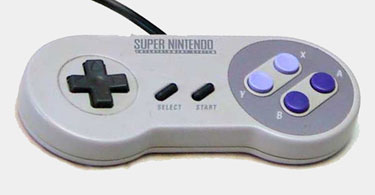
So, check this thing out.  This one is bit more complicated, in fact, it's nearly impossible to know anything that this mouse does by looking at it.  Very low functional legibility.  My only guess is the dark purple buttons are the normal left and right click (dig the SNES color scheme though).  Also scroll wheels are ubiquitous now too thanks to the interwebs typical layout.

So which is a better mouse?

Neither!  They are completely different needs, and completely different products. 

Some of you may remember life before the mouse.  I don't actually, but I have had experience using UNIX and DOS interface inventory control systems.  These were super stable programs designed in the late 80's that often stuck throughout industry because of the rock-solid reliability.  In fact, a lot of companies ended up switching to new programs only because XP wasn't DOS based.  Anyway, these programs were by and large non-graphic user interfaces, which means, keystroke navigation.  Keystroke navigation is not something that comes naturally, but with mastery, absolutely destroys mouse navigation for reference, data-entry, and eventual ease of use.  You don't have to take your hands off the keyboard, those F buttons actually did things, and with a swift tap, you could move from one screen to another.  Again, like I was saying last time, these 10 digits attached to our arms represent the pinnacle of data entry ability.  I mean, I think the bugle is a nice instrument, but the saxophone, it finds itself in more places, doing more things, to be sure.  You see the correlation?

This OpenOffice open-source mouse is of the same nature.  Many people have no choice but to use the mouse, perhaps for drawing, manipulation of 3D environments, or selecting one thing from a hundred others like a paint swatch, but people shouldn't have to use a multi-foldered pull down menu just to click on a command that they should be able to do from memory, or as soon as they think about it.  This mouse, in other words, in conjunction with a complicated program, could increase productivity to an amazing degree.  It would take hours and hours of working with it, you would have to program it yourself, each button, which may also take a lot of time and thought.  The end result though, is further speeding up the interaction between user and machine.  If you have ever seen anyone use an ADOBE product, that uses it every day, and customized their keyboard shortcuts, you wouldn't believe how fast someone can photoshop/video edit/illustrate.  No one else is going to be able to sit down and use his computer quite as effectively.  In fact, the sight of that mouse might keep people from even trying to use his work-station.  I would count that as a benefit as well.  It reminds me of a T-shirt from Penny Arcade.


Playing Guitar Hero requires mastery of 5 buttons, Photoshop requires mastery of as many as keystroke shortcuts as you can remember.  Hence the joke, and hence the speed at which the masterful can interact with the digital environment.

Sometimes we design for the computer in the library (ANY end user).  Sometimes we design for one individual, doing one task as quickly and efficiently as possible.  Both are effective solutions to real needs.

Sometimes requiring mastery benefits us, more often it does not, but one can't strip everything down to one button.  Flip Video makes a good argument for it though, but the professional will still need the canon GL-2.

GeorgeP

Thursday, January 27, 2011

The permanence of 'digital' data entry

Yesterday's post may not have made sense to anyone.  It was a presentation for class today, and rather than fumbling around with flash drives in front of class, I just used the internet.

When I think of the future of computer interfaces, there's one realization I keep coming to.  There will always be a need for silent unencumbered expression of thought.  And the most versatile method, it to use our ten digits.  Hence my play on words, "Digital data entry".  The most ubiquitous of these mediums are handwriting, typing, and texting, chronologically.  Getting rid of the keyboard seems to me a nearly impossible ordeal.  Gesture interfaces will be important, no doubt, especially as we deal with arranging and understanding huge quantities of data at one time.  Gesturing a business email though, won't catch on.  Even with intelligent software that can help predict and show the most likely words you may use next, it just doesn't make sense to use your arms that much for text entry.  Though, I suppose there will be some who adopt it for the sole purpose of burning a few calories while they waste away inside a cubicle.  Kind of like the office chair ball.


I could see someone marketing gesture software for the office though, something that sells itself as a fitness product.  Take a Wii balance board and put it on a chair.  That's your mouse, and you shift your weight to point it around.  Work those obliques!  Then use a few wands, like a Wii or Playstation Move, and design some small pockets to add weight as you wish.  Viola, you may look silly, but your arms and abs could look better.  I'll make that prediction now, someone will use this idea.  But this can only be a fad, or an option for young vain executives, and silly creative types (me?), you'll never see this set up in a library.  We must design for the lowest common denominator, and the fact is, there are many people out there that don't have the ability, or don't want to waste their energy while they write an email or surf the web.

We have 10 fingers capable of individual movement, and we need an interface that reacts to our input.  Gestures cannot do this physically, only aurally.  Feedback is important, buttons are important.  That's why touch screens (virtual buttons) click audibly or vibrate physically, to help us know something has been pressed.  I do not doubt the variety of ways this technology can be used, but you won't see it in the accounting office.

What else could we input with?  Voice?  Yes, but we're not going to talk out the email we're sending mother at work in front of everyone, nor would we want a whistle blower to have to verbalize an anonymous tip off.  Silence is definitely key here.  Of course it is, that's why texting is so huge now.  I think we all realize that texting is basically mobile telegraph stations.  It appears kind of backwards.  If we can just talk, why don't we?  The telephone took much longer to develop, and it revolutionized the world.  Well, the reality is, we can't always talk.  I like to send someone my thoughts while I'm thinking them, but maybe they're at work.  Maybe it can wait (ex: "You left your hat").  Maybe you don't need a response, like ("I'll be upstairs at Henry's").  There are a million reasons not to speak your message, and there's hardly a phone out there that hasn't tried to make texting easier.  By QWERTY or by predictive text, T9, etc.  There's a very real need for it, don't get turned off because 13 year old girls aren't talking anymore.

So what then?  Mind control?  Should you be able to control a public computer?  What connection does that computer have with you?  Can you control another persons computer?  I can't even imagine how easy it would be to accidentally send something, or think the wrong words to your embarrassment.  This is filled with troubles and riddles, and all sorts of security problems.

So what is the future?  The future is the keyboard I'm afraid.  Could we all switch to a new data entry system?  The fingers are just too good of an input device to ignore, but we've trained the whole nation to type on QWERTY.  Tiny movements, 10 individual options at any given time, and the whole world has more or less accepted this device.  Maybe there is a better layout, maybe we could merge some stenography concepts into a simpler looking device, but that would leave out the people that need to 'hunt and peck'.  I think we've got another 40 years of this device, if not longer.  Look at the original digital data entry machine.  The first keyboard.  The piano.


The piano stuck.

GeorgeP

Wednesday, January 26, 2011

Wayfinding

The specific wayfinding task we have chosen is for someone who is unfamiliar with the Art and Design building, who must start at the east stairs and find room 345.  My wife was the first outside research subject.


To my surprise, she chose this entrance.  I found it a little unwelcoming, but she was undeterred.


Though she wandered a bit in the stairwell, she found the 3rd floor due to the signage.


The only sign that suggests other rooms, but was not heeded the first time.


Instead we walked around the rest of the building, even up to Gregory Thomas' office.


She eventually finds the way, admitting that it's the last option.


It's the bright room at the end of the hall.  I asked her to find her way back to the stairs, and thankfully, she tried the other route away from the room, and we wound up in the same stairwell we began in.

Below is the actual path we walked through the building.


Though we've only started with one tester, I believe this is a wayfinding PROBLEM that can be resolved.  The above is a representation of the problem, that we hope to develop into the solution with more research and more detailed observations.

GeorgeP

on the origins of 'makethink'

My first design class, BDS 101, is actually titled, Think/Make.  It is the first iteration of a new design curriculum, and though things can be a bit confusing, I feel they are up to date, and headed in the right direction.  I read a lot of the design education articles over on Core77, and it seems the people behind the new curriculum are too.  I think Bruce Mau is the one that talks about "T-Shaped" designers.  The top of the T represents the wide area of knowledge, and at least one area of real depth into a specific field.  The school is forcing me to confront graphic design, photography, painting, drawing, etc.  Thinking, making.  It's a good title, but not where I derived mine.

Two years ago, AIGA had a design conference called Make/Think.  Most all of the design world was represented in some form or another, from design educators, to photographers, to industrial designers.  This was the first time I saw the words make and think smashed together.  At least publicly.

As you can see, this appears closely linked to the name of my blog.  Well, it's actually my gmail address.  Back in 2004, I got an invite to Gmail, and I really needed to retire my old pseudonym (you don't want to know).  I remember a friend of mine, Paul Kriley, had a screen name, "sail drawn soul" and I was mesmerized at how much was contained within the simple three words.  I was on a search for something broad, that I hoped could still help define me a bit.  I ended up with makethink.

So there we have it.  It's not from the class, or conference, perhaps inspired by the band-name Do Make Say Think, but no matter.  It's my handle, and I won't give it up.  Even though really, 'sail drawn soul', is hands down 10 fold the name.  Maybe I need a third word.

BeerMakeThink
MakeSomeThink
WakeAndMake
ThinkMakeEat
ThinkSleepMakeBreakfast
BikeMakeSweat
EatPrayLove
ThinkRenderRepeat
MakeDrawPretty

Well, maybe not?  Although, I keep chuckling at wake 'n' make.

GeorgeP